
of prospects result in a producing mine
GNS Science mineral-potential assessment for MBIE[1]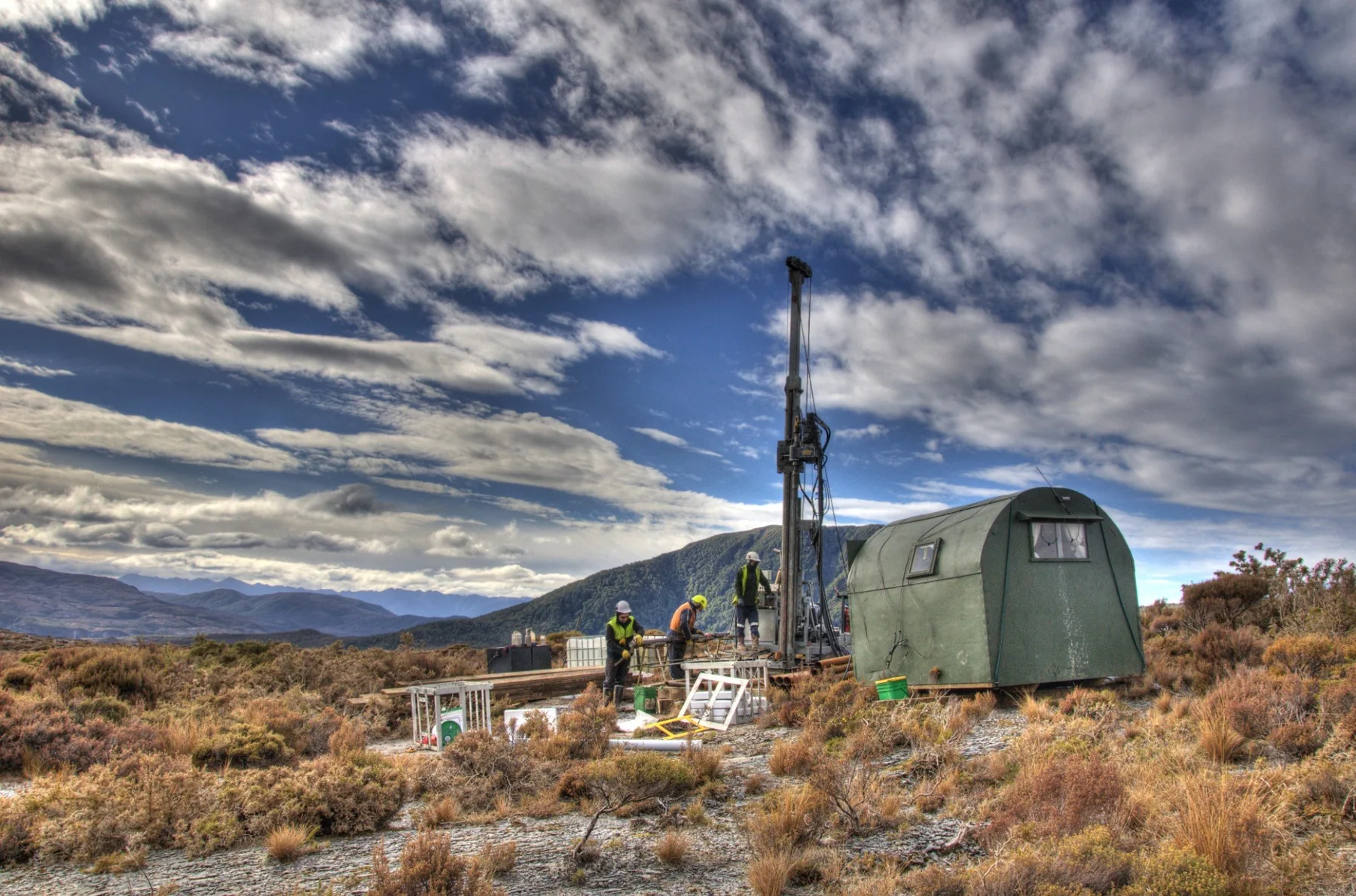
MM02 · Theme 2 of 5 · Why mining matters
Every Mine Starts with Exploration
Exploration is a staged process for testing geological ideas. Most prospects do not become mines, and weak ideas should stop as the evidence improves.
← Back to all Why Mining Matters topics
MM02
Theme 2 of 5Evidence file
What the slogan means
Exploration is evidence, not a promise of a mine
A permit, geological concept, soil anomaly or drill intersection is not a mine. Research, mapping, sampling, geophysics and drilling progressively test location, scale, continuity and quality. Only projects that survive technical, economic, environmental, access and regulatory tests can progress.
published range for exploration-to-mining progression
An assessment, not a guarantee for any project[1]prospecting and exploration expenditure under Crown-mineral permits in 2024
Official statutory permit reporting[2]The practical chain
Research and a geological model
Mapping, sampling and geophysics
Drilling, logging, assay and QAQC
Advance, redesign or stop
Supporting evidence
What supports the message
New Zealand permit information and geological assessments explain how exploration narrows uncertain geological ideas, and why most prospects do not become mines.
Attrition is the normal outcome
GNS Science’s 2024 assessment for MBIE states that fewer than 1% of prospects result in a producing mine. It is the strongest New Zealand-specific published figure available and is presented here as a New Zealand assessment, not a universal global ratio.
[1]Work narrows as evidence improves
NZP&M describes prospecting and exploration as work used to identify the location and size of mineral deposits before possible mining. Early desktop and surface work normally precedes more expensive and more intrusive drilling.
[3]Negative results have value
A result that weakens or rejects a geological model can prevent unnecessary drilling and disturbance. Exploration is successful when it reaches a defensible decision, including a decision to stop.
[3]Discovery is only one gate
After discovery, a project must still establish geometry, continuity, processing response, mining method, infrastructure, economics, environmental effects, land access, approvals, finance and closure planning. NZP&M notes that progression can take decades.
[1] [3]New Zealand relevance
Why this matters here
New Zealand exploration relies on staged evidence, from geological mapping to drilling and technical assessment, before development can be considered.
New Zealand expenditure
Permit holders reported $62.3 million of prospecting and exploration expenditure for 2024, down 12% from 2023.
[2]A staged regulatory pathway
Prospecting, exploration and mining are different phases. An exploration permit is not authority to mine, and activities may require separate access and regulatory approvals.
[3]Earlier evidence matters
The GNS assessment emphasises retaining previous results because several companies may test a prospect over time and later explorers need the prior evidence.
[1]Qualifications
What exploration results actually establish
An exploration permit, geochemical anomaly, drill intersection or resource estimate does not establish that a mine can operate.
Some geological questions can be answered from existing records, mapping or sampling; drilling is not always necessary.
Ground disturbance and site controls need to match the field methods, terrain and hazards involved.
Sources
Where the evidence comes from
[1] GNS Science for MBIE · 2024The mineral potential of New Zealand - Part 1The published <1% attrition estimate and 5-30 year range.↗[2] New Zealand Petroleum & Minerals · 21 November 2025Mining industry statistics for 2024Statutory prospecting and exploration expenditure.↗[3] New Zealand Petroleum & Minerals · Current official guidancePhases of mineral exploration and productionOfficial description of the staged pathway and its possible duration.↗
Start a conversation
Planning mineral exploration?
Wairiri can help review a target, assemble historic data and design fieldwork that tests the geological interpretation.